
Giving hope to children with burns
Rachel was 10 years old when she suffered 40% burns from her waist to ankles. Having such severe burns meant the she was in Intensive Care for four weeks and missed around a year of school. Now aged 16, Rachel and her dad Matt, share their story with us and explain how a new Sparks funded research project for burns could have massively reduced Rachel’s treatment.
“I was about to be in an Oliver Twist play at school,” explains Rachel, “And so my mum had bought me a long nylon skirt as part of my costume. I was at home trying it on for the first time and started to twirl around in it. As I spun in a circle, the skirt billowed out around me which meant it grazed the gas fire we had on. Because I continued to spin round, not noticing that the skirt had set alight, the flames went up the skirt.
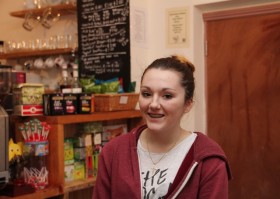
At this point my mum grabbed me and flung me onto the sofa where she began patting me with the cushions. This resulted in the sofa setting alight so my mum ran and grabbed water which she poured over me. Eventually she wrapped her coat around me, which put out the fire. By this point the nylon skirt had melted onto my legs. My mum called an ambulance but because there was none available at that time, a paramedic was sent round to the house. I can remember lying in the hall waiting for him to arrive and as I looked down at my legs I saw the skin blistering, peeling and popping in front of my eyes.”
From this point, Rachel cannot remember much of what happened, so her dad, Matt takes over adding, “When I got to the local hospital they told me that Rachel’s burns were too severe for them to treat so they began to ring a number of other hospitals to see if they would take her. Most hospitals were asking for photographs and then, on seeing the burns, explained they were too severe for them to admit Rachel.
By this point it was 4am and the specialist paediatric burns unit at Chelmsford had agreed to admit Rachel. I was climbing the walls and was desperate to get Rachel treated. We were taken to Chelmsford in an ambulance and almost immediately Rachel was taken for a skin graft. I was told it would be touch and go if Rachel would survive and to prepare myself for the very worst.
Rachel spent two weeks in intensive care and then two weeks in the high dependency unit. It was during this time that she also caught MRSA, so she had to be isolated from any other patients.
Our lives changed
Once Rachel was at Chelmsford her mother and grandmother stayed with her during the week and I would go up from Friday to Sunday. I had to give up my job as Finance Director of a charity because of the care Rachel needed. We all changed our lives dramatically.
Rachel ended up missing around a year of school, as she needed to recover and learn how to walk again. Before she went back I, along with Rachel’s occupational therapist, went to the school to tell the children about Rachel’s burns and show them the pressure garments which Rachel would have to wear.”
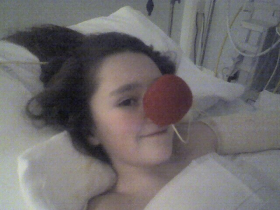
Rachel continues, “I think the part of being burnt I found most difficult was having to wear the pressure garment. They are so hot in the summer and I felt that it made it more obvious I had been burnt. One of the hardest parts of being burnt for me is people staring at you, as a teenager I think appearances are incredibly important and I often cover my legs up with tights to stop people looking at my burns.
I decided to become a nurse after being burnt, as I want to help children who have been through situations like mine. It’s all I’ve wanted to do since the age of 10.
Hope for the future
I now have skin grafts once a year to keep up with my growth and this does get in the way of my college work. I am always having to catch up as the operation will take me out of college for about a month. However, I feel like if this hadn’t happened I might not be as determined or driven as I am in my life to be a nurse and help make a difference.
Matt adds, “I’ve been so proud of how hard Rachel has worked, especially catching up with everything she has missed at college. I know she’s a real fighter.
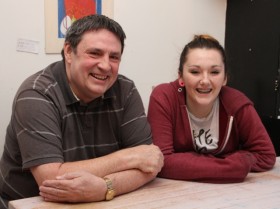
Medical research is so important to us because of what has happened to Rachel. I know the funding isn’t always there, especially for children and we hope by sharing our story we can show what a good cause Sparks is.”
Rachel concludes by saying, “I hope the Sparks funded research into the treatment of burns is a success because it would have been a much better treatment for me. Being able to have a treatment that grows with you would have saved me from a number of operations. It sounds amazing and I really hope this treatment can benefit children like me in the near future.”
Find out more about our pioneering research to improve the treatment of burns.

